Local News
New Footpath Closures at Loch Ard Forest: What Walkers Need to Know
Loch Ard Forest is the sort of place where a two-hour walk quietly turns into four. The shoreline path, the tracks behind Craigmore, the quiet miles towards Loch Chon: between them they hold a whole season of Saturdays.
Which is why the current round of footpath closures deserves five minutes of your attention before you pull on your boots. Three areas of the forest are shut to walkers while felling, storm clean-up and bridge repairs are carried out, and one of them takes out the much-loved circuit of the loch.
Which paths are affected
The closures are not one tidy block. They are three separate jobs at different stages, and they overlap enough that the traditional loop around Loch Ard no longer works as a single outing. Bring a map, and expect to replan on the day.
The south shore of Loch Ard
This is the one that changes most people's plans. The shoreline path is closed for a long stretch on the south side, from the point where it leaves the road near the Kinlochard end to where the track finally turns uphill away from the water. Barriers and tape are up at both ends, and there is no way through along the beach even when the loch is low. Because this section forms the natural link between the eastern and western halves of the circuit, walkers are being turned back rather than diverted.
The tracks above Craigmore
Lower down the slope, the forest tracks above Craigmore are closed in stages while timber is being extracted. The signs sit at the junctions rather than on the main path, so it is easy to walk up from the wrong direction and meet a barrier you were not expecting. The upper viewpoint path itself remains open. Approach it from the Aberfoyle side rather than from the loch shore.
Loch Chon and the forest drive side
A short section of the Loch Chon track is shut, along with the piece of forest road that links it towards the drive. This one is intermittent: as machines move, the closed stretch moves with them. Treat any barrier you find as current, not as something left behind last week.
Why the work is happening now
Three reasons, and all of them are the kind that cannot be scheduled around weekends.
The biggest is larch. Disease has spread through larch stands in this part of Scotland, and infected trees have to be felled to slow it down. Felling means harvesters, chainsaws, timber lorries on single-track roads and, most importantly for walkers, trees that can drop without warning and branches that slide off a stack. That is the reason behind most of the tape you will see.
The second is windblow. Storms leave trees leaning, half-uprooted and hung up in their neighbours. They come down in the next gale, or the one after, and nobody can predict which. Clearing them is slow work because it is dangerous work.
The third is a footbridge that has reached the end of its life and is being rebuilt. Bridge jobs tend to take longer than anyone plans for, because access for materials is awkward and the weather decides the timetable.
Worth remembering while you are grumbling at a barrier: these closures are not permanent, and the forest will look better for the work in a few years. Regrowth in a felled coupe is quick and full of birds.
Alternative routes that remain open
There is still plenty of walking. If you are heading out in the next few weeks, these are the options that generally hold up:
- The waymarked trails at the Lodge Forest Visitor Centre near Aberfoyle. Short, well signed, and the easiest choice with children or a dog. Expect mud, and wear something you do not mind washing.
- The upper viewpoint path above Craigmore, approached from Aberfoyle. The climb earns its keep on a clear day. Check the junction signs as you go, because the lower tracks are the closed ones.
- Loch Chon, from the north end and back. An out-and-back rather than a circuit, but the views along the water are as good as anything in the forest.
- The Loch Drunkie area and the forest drive. Access here varies with the season and with ongoing work, so confirm the position before you set out rather than after you arrive.
- The longer hill approaches towards Ben Venue. A proper day out with proper consequences. Only worth it if you are confident with navigation and the ground conditions.
None of these are guaranteed open on any given morning. Signs on the ground beat anything you read elsewhere.
When will things reopen?
Reopening is phased rather than a single date, and it depends on the felling fronts moving on, the ground drying out enough for machines, and the bridge work finishing. In practice that means the tracks above Craigmore and the Loch Chon side are likely to be released first, section by section, as each area is cleared and made safe. The south shore path will almost certainly be last, because it cannot reopen until the bridge is done.
Signs at the barriers carry an indicative date, and those dates do move. Two things follow from that. First, do not trust an old guidebook, a cached route on a phone app, or a route card written before this winter. Second, build a plan B into your day before you leave the car park. A twenty-minute detour on a map is much less annoying than an hour of walking back the way you came.
Path closed: forestry operations in progress. Do not enter. Please use the signed alternative route and follow instructions from site staff.
That wording is standard across Scottish forests, and it is not a suggestion. Statutory access rights can be suspended temporarily where land management work makes an area unsafe, and a felling site is about as unsafe as a forest gets. Ducking under tape to save half a mile puts you in the path of falling timber and moving machinery, and it puts the people working there in the awkward position of having to stop work and ask you to leave.
If you are organising a group walk, a club outing or a commercial activity, check the current position with the land manager before you promote it. General guidance is fine for a solo wander; it is not enough for an organised event.
Before you set off: a short checklist
- Check the latest access information. The forest manager publishes closure updates, and the visitor centre at Aberfoyle should know what is shut this week.
- Read the signs in the car park, not just the one at the gate. They often list diversions further along your route.
- Carry a paper map and know how to read it. Signal in the forest is patchy, and diversions are rarely signposted for as long as you would like.
- Take the diversion seriously and add time for it. Twenty minutes here, half an hour there.
- Clean your boots before and after. Biosecurity matters when disease is part of the reason for the felling.
- Keep dogs close, and on a lead anywhere near machinery or a felling site. Timber stacks and loose brash are not good places for a curious nose.
- Tell someone your route and your expected return. Old habit, still the most useful safety measure there is.
Loch Ard will still be there when the tape comes down, and the paths that survive the work will be in better shape than the ones we have been squelching through for years. In the meantime, go, just go somewhere else in the forest, and take the long way round.
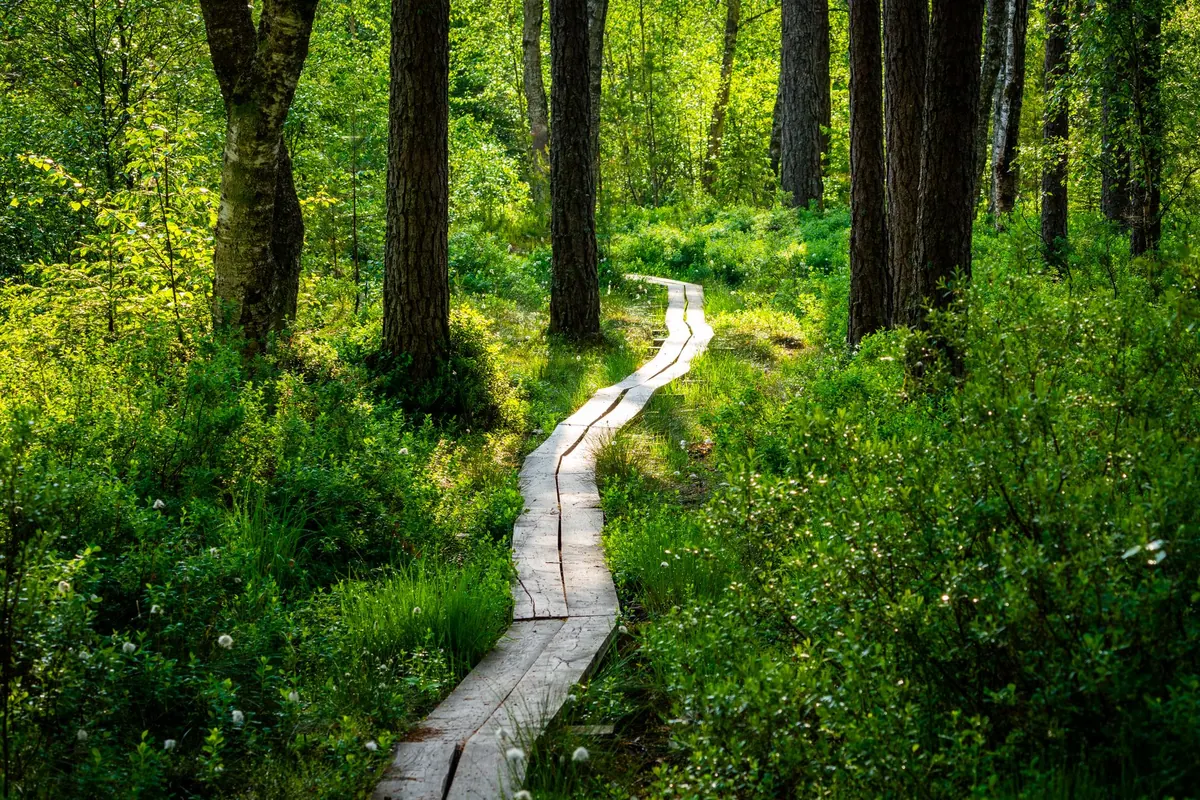
Photo: Lorenzo Manera / Pexels