Wildlife
How to Spot an Osprey Hunting Over a Scottish Loch: A Beginner's Guide
How to Spot an Osprey Hunting Over a Scottish Loch: A Beginner's Guide
Ospreys returned to Scotland from near-extinction and remain one of the country's great wildlife sights. Nothing quite matches the moment a big fish-hawk stops in mid-air, hovers, then drops feet-first into a loch with a splash you can hear from the shore. Plenty of visitors miss it, though — often because they are looking in the wrong place at the wrong time, or at a gull. Here is how to improve your odds.
What you are actually watching
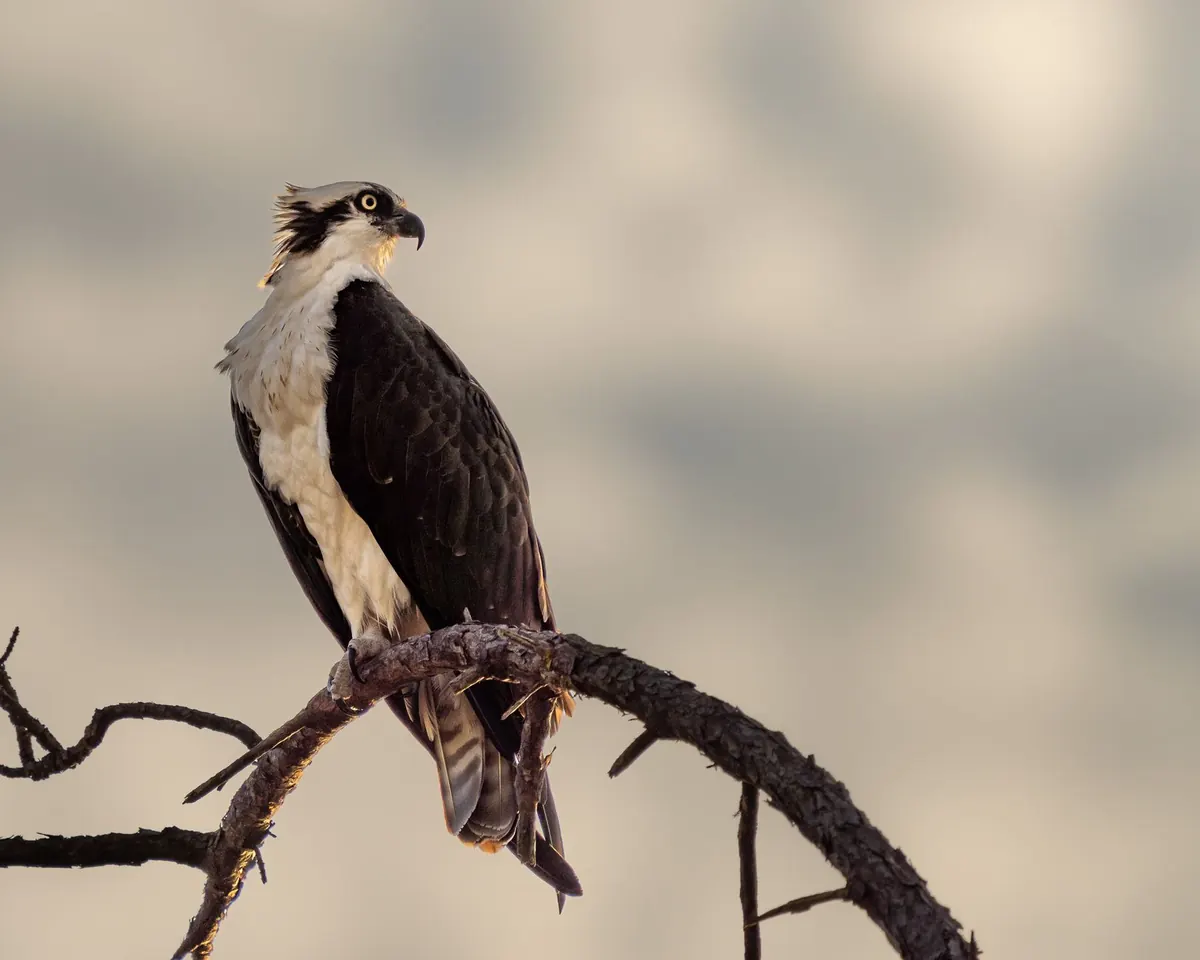
An osprey is bigger than a buzzard but slimmer, with long, narrow wings that bend sharply at the wrist. That kink gives it a gull-like silhouette and is the quickest way to separate it from a buzzard, which glides on broad, blunt wings. Seen well, an osprey shows white underparts, a dark brown back, and a pale head with a dark stripe through the eye. In flight it often holds its wings in a loose M.
The behaviour is the giveaway. A hunting osprey does not usually soar high and distant for long. It flies low over water with slow, deliberate wingbeats, scanning the surface. When it sees a fish, it may stop, hover with wings raised and body almost vertical, then plunge feet-first. At the last moment it swings its legs forward, hits the water with a splash, and often disappears for a second before rising heavily with a fish held head-forward, like a torpedo. That head-forward grip reduces drag and is one of the most reliable signs that you are watching an osprey and not a large gull.
Ospreys are fish specialists. In Scotland they take trout, pike, perch, and sometimes flounder in coastal lochs and estuaries. Their feet have reversible outer toes and spiny scales that help them grip slippery prey. They can shake water from their plumage in flight, and they often eat on a favourite perch — a dead tree, a rocky island, or a man-made pole — rather than beside the water where they caught it.
Where to look: lochs, rivers and the right perches
You do not need a hide or a reserve to see an osprey, but you do need water with fish and somewhere to perch. In Scotland, the classic combination is a shallow, fish-rich loch surrounded by open woodland and dead trees. Ospreys also hunt along rivers, over estuaries, and around fish farms, where a tall pole or pylon can become a regular dining table.
Scan the edges first. An osprey often sits upright on a bare branch, a telegraph pole, or a small island, looking bulky and pale-headed. It may stay there for an hour, digesting or waiting for the wind to drop. If you see a large bird on a loch-side perch in spring or summer, put your binoculars on it before you assume it is a buzzard. The white head and dark eye stripe will settle the question.
Timing matters as much as place. Ospreys arrive in Scotland from late March and early April, having flown from West Africa. They breed through spring and summer, and most leave again in August or September. The best months for repeated hunting views are usually May, June, and July, when adults are feeding chicks and making many trips to the nest. Early morning and late afternoon are often most productive, especially on calm, bright days when fish are near the surface and the birds can see them clearly.
The hover and the plunge
The hover is the moment to watch. The osprey slows, spreads its wings, and hangs almost motionless into the wind. Its head is down, locked on a fish. Then it folds partway and drops. A hunting osprey can enter the water with a splash that carries across a quiet loch, and the sound is often what draws your eye. After the strike, watch for the bird rising from the water, water dripping from its wings, fish held lengthways. If it misses, it may circle and hover again, sometimes repeatedly.
Telling ospreys apart from other birds
Most beginners mistake buzzards for ospreys, or ospreys for gulls. Buzzards are common over Scottish lochs, and they often sit on poles. But a buzzard is compact, broad-winged, and blunt-ended. It soars on wings held in a shallow V, and its mewing call is completely different from the osprey's sharp, whistled alarm calls. A red kite has a forked tail and angled wings; a marsh harrier is slimmer and quarters low over reeds; a heron has a folded neck and trailing legs. A large gull is smaller, with a different wingbeat and no dark eye stripe.
Use this quick comparison when you are unsure:
- Osprey: long, narrow wings with a sharp kink at the wrist; white head with dark eye stripe; white underparts; dark brown back; often hovers before plunging feet-first.
- Buzzard: broad, rounded wings; short, fan-shaped tail; brown and creamy; soars and mews; rarely hovers over water.
- Red kite: forked tail; long, angled wings; reddish-brown body; often scavenges and drifts.
- Gull: smaller; more continuous wingbeats; usually feeds from the surface; does not plunge feet-first with a fish.
Best conditions, seasons and classic Scottish sites
Weather can make or break a sighting. Ospreys need to see fish, so flat, calm water and decent light help. A light breeze is useful because it lets them hover into wind. Heavy rain and strong gusts often keep them perched. Bright, still mornings in late spring are ideal, but an overcast afternoon can also produce good hunting if the water is clear and the wind is steady.
Some of the most reliable places to try include the RSPB reserve at Loch Garten in the Cairngorms, the Scottish Wildlife Trust's Loch of the Lowes near Dunkeld, and the wider Speyside area, where ospreys fish over several lochs and rivers. Further south, Loch Ken and the Galloway hills have produced sightings, while Loch Lomond and the Trossachs offer a chance for a lucky encounter. At any of these sites, check with local visitor centres or reserve staff — they often know which perches are being used and where a nest is visible from a safe distance.
How to watch without disturbing them
Ospreys are sensitive to disturbance, especially near nests. Keep your distance, use binoculars or a scope, and stay behind screens or in public hides where they are provided. Do not fly drones, use flash, or approach a perched bird for a closer photograph. If an osprey stares at you, calls repeatedly, or leaves a perch as you arrive, you are too close. Back off and watch from further away. The best sightings are often the quietest ones.
Patience beats pursuit: find a good vantage point, settle in, and let the osprey come to you.
A beginner's field checklist
- Check the season: late March to September, with May to July the peak for hunting activity.
- Choose fish-rich water: lochs, rivers, estuaries, and fish farms with nearby perches.
- Scan for perches: dead trees, islands, poles, and pylon crossbeams.
- Look for the silhouette: long, narrow, kinked wings and a loose M shape in flight.
- Watch for the hover: wings raised, body vertical, head down.
- Listen for the splash: a feet-first plunge is unmistakable once you know it.
- Confirm the fish carry: head-forward, torpedo-style, often taken to a distant perch.
- Stay ethical: keep distance, avoid disturbance, and follow reserve guidance.
Why the moment stays with you
Seeing an osprey hunt is more than a tick on a list. It is a reminder of a conservation success story: a bird that was once gone from Scotland, then returned, and now raises chicks in view of careful watchers. The splash, the struggle, the heavy rise with a fish — these are the details that turn a walk by a loch into a memory. Take your time, keep scanning, and do not be discouraged by a quiet first hour. On a Scottish loch in summer, the next dark-winged shape on the horizon could be the one you came to see.
Photo: Dmytro Koplyk / Pexels